


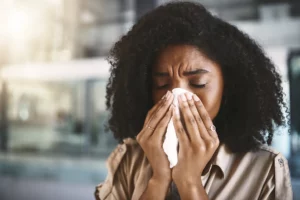
An “allergy” is a reaction of your immune system to otherwise harmless substances (allergens from pet dander, pollen, dust, etc.).1 Your immune system goes into fighting mode against these allergens, causing symptoms like sneezing, runny nose, stuffy nose and itching.1-4
Allergic Rhinitis (AR), or hayfever is one of the most common chronic conditions worldwide, affecting between 10 % – 40 % of adults and children worldwide.3 The South African cohort from the International Study of Asthma and Allergies in Childhood (ISAAC) revealed a substantial and increasing prevalence among 13- to 14-year-olds – from 30.4 % in 1995 to 38.5 % in 2002.3

Common indoor allergens3,8
Common outdoor allergens3,8


Pollen

Mould Spores
Dust Mites

Animal Dander
Red Eyes

Sneezing

Itchy Throat
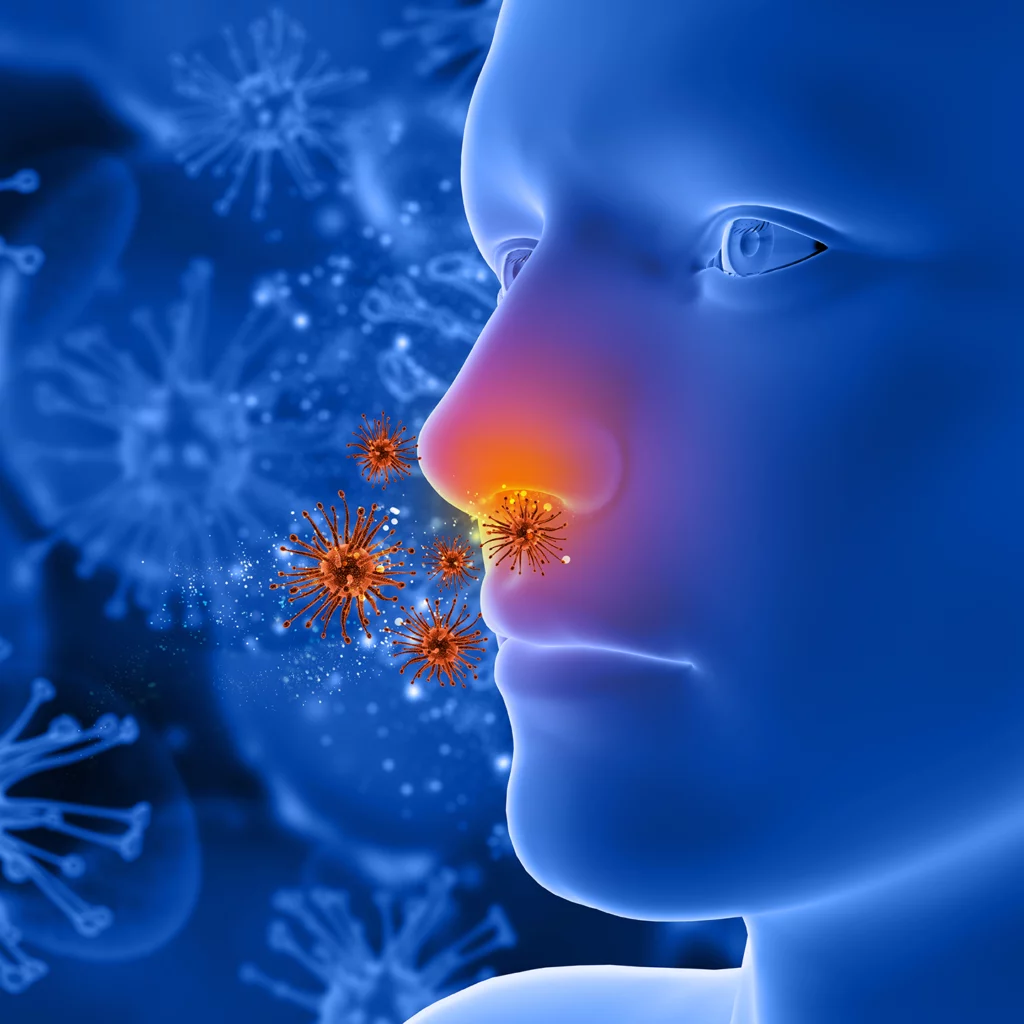
Histamine is the main “allergy messenger” in the early phase of the allergy response.9 When allergens enter the nose, histamine is released from mast cells and causes early allergy symptoms such as sneezing, itching, and a runny nose.9,10
PAF is a key player in the late phase of the allergy response and works alongside histamine.9,10 PAF causes swelling and leakage of blood vessels in the lining of the nose, resulting in a runny and stuffy nose.9,10 PAF recruits inflammatory cells, which result in inflammation and chronic allergy symptoms.11,12 PAF is thought to play a role in priming, i.e. increasing the response to allergens.13
Other molecules like leukotrienes, prostaglandins, cytokines, and eosinophils work together to keep the allergic reaction going.10 They can increase inflammation, mucus production, and worsen swelling.10,11 The late phase is then followed by a chronic phase with ongoing inflammation.12

Sleep deprivation and fatigue

Decreased concentration

Learning problems

Negative mood
Allergic rhinitis can be described based on how often it happens and how much it affects your daily life: